

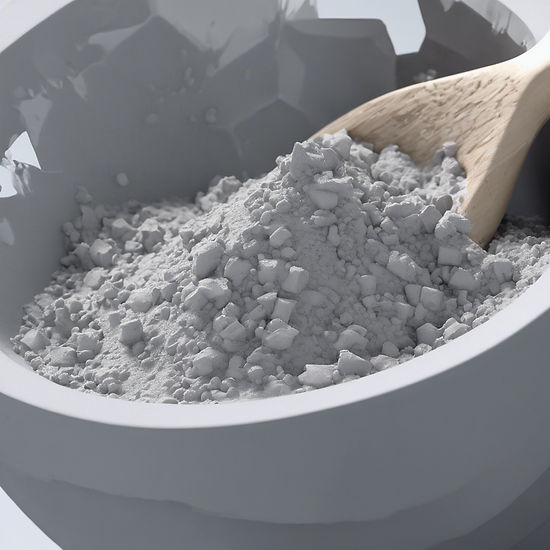
The Engineering Behind NovoCrete®

STABILITY FROM THE GROUND UP
NovoCrete® enhances the natural cement hydration process within suitable in-place soils, creating a dense, hydraulically bound base layer engineered for long-term strength, flexibility, and durability. Rather than replacing existing materials, the process improves their engineering performance through controlled mineral reactions and quality-assured construction practices.
How NovoCrete® Works
NovoCrete® stabilization follows a controlled process that begins with project-specific evaluation and ends with a verified hydraulically bound base layer. Each step is intended to confirm suitability, support consistent construction, and deliver long-term performance.
Site Evaluation
Existing soils are reviewed and tested to confirm stabilization suitability and establish project-specific performance requirements.
Mix Design
Cement content and NovoCrete® dosage are determined through testing to achieve the required strength, durability, and moisture resistance.
In-Place Stabilization
NovoCrete®, cement, water, and existing site materials are blended, graded, and compacted using standard stabilization equipment.
Performance Development
As curing progresses, the treated layer develops into a dense, hydraulically bound base designed to support long-term infrastructure performance.
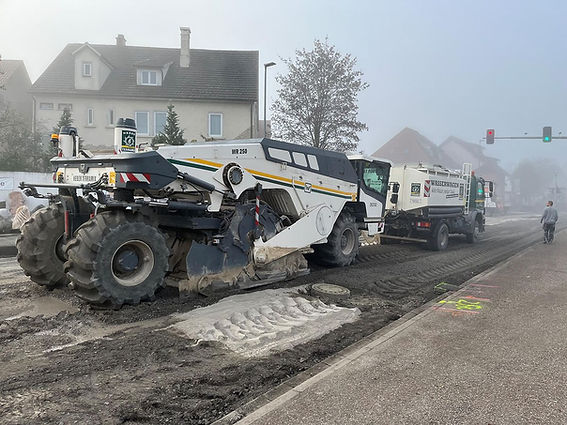

DESIGNED FOR REAL-WORLD CONDITIONS
NovoCrete® is engineered to perform across a wide range of environmental conditions when proper engineering design, moisture control, and construction practices are followed. Successful stabilization depends on matching the construction process to site conditions.
Temperature
Suitable for construction in temperatures ranging from approximately –5°C to +50°C, provided adequate moisture control and curing conditions are maintained.
Moisture Management
Consistent moisture content is essential throughout mixing, compaction, and curing to ensure proper cement hydration and long-term performance.
Frozen Ground
Stabilization should not be performed in frozen soils or where frost is expected during curing, as trapped moisture can compromise the development of the stabilized layer.
Rain and Wind
Construction should be suspended during heavy rainfall to prevent washout or dilution. Under windy conditions, materials should be applied close to the ground, with spreading postponed when wind speeds exceed approximately 30–38 km/h.
Engineering Consideration
Successful stabilization is achieved by combining appropriate environmental conditions with verified mix design, quality-controlled construction, and proper curing practices.
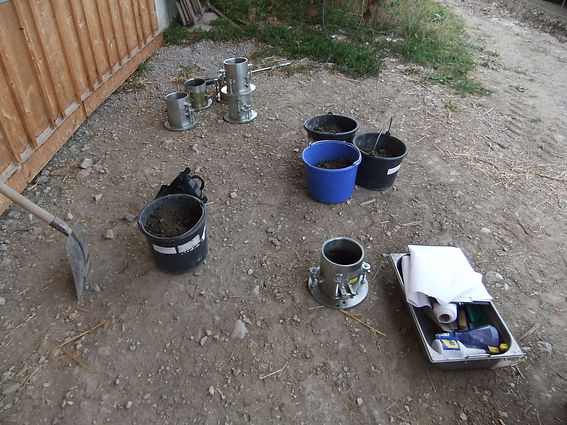

LABORATORY VALIDATION & MIX DESIGN
Every successful stabilization project begins with laboratory evaluation, not assumptions. Testing confirms whether existing materials are suitable for stabilization and determines the optimum mix design required to achieve long-term performance.
Phase 1 – Material Evaluation
Existing soils, aggregates, or recycled materials are evaluated to determine their engineering suitability.
Typical testing includes:
• Grain size distribution
• Natural moisture content
• Density and compaction characteristics
• Soil classification and consistency
Where multiple soil types exist within a project, each material is evaluated independently to ensure an accurate mix design.
Phase 2 – Mix Design Development
Laboratory trial mixes are prepared using project-specific soil, cement, water, and NovoCrete® to establish the optimum stabilization blend.
Performance testing typically includes:
• Proctor compaction testing
• Unconfined Compressive Strength (UCS)
• Frost-thaw durability
• Water resistance (where required)
• Additional project-specific performance testing
Engineering Confidence
The objective is not simply to determine how much cement to use; it is to identify the most efficient mix that delivers the required engineering performance while minimizing unnecessary material use and construction cost.
Every project receives its own laboratory-verified mix design before construction begins.
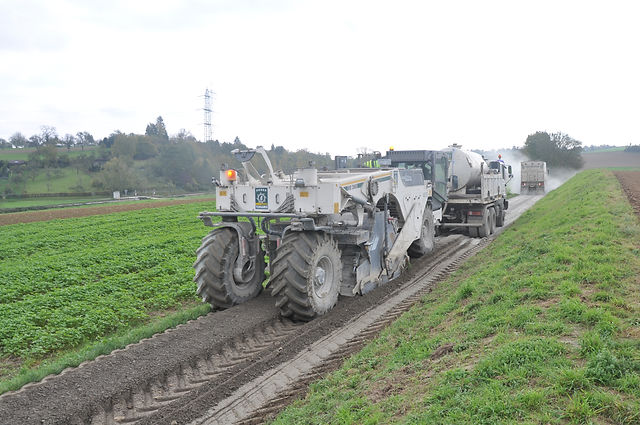
CONSTRUCTION EQUIPMENT
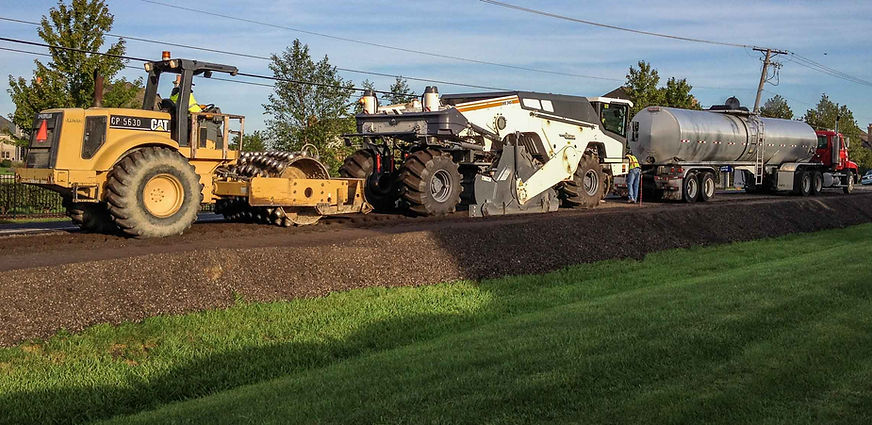
NovoCrete® stabilization is completed using standard road rehabilitation equipment commonly employed throughout the construction industry. No specialized or proprietary machinery is required, allowing contractors to integrate the process into established construction practices.
Typical Equipment Includes
-
Stabilization / Reclaimer (e.g., Wirtgen WR Series, CAT RM Series, BOMAG RS Series, or equivalent)
-
NovoCrete® spreader (or pre-mixed application where appropriate)
-
Cement spreader with calibrated application control
-
Water truck with controlled spray system
-
Motor grader for profiling and final grading
-
Steel drum roller for primary compaction
-
Pneumatic or rubber-tired roller where project conditions require
Why It Matters
Using familiar construction equipment reduces mobilization costs, simplifies contractor training, and allows the NovoCrete® technology to be incorporated into conventional road rehabilitation projects with minimal disruption to existing construction practices.

CONSTRUCTION PROCESS
Construction follows a controlled sequence developed from the project-specific laboratory mix design. NovoCrete®, cement, water, and existing materials are blended in place using standard stabilization equipment to produce a uniform hydraulically bound base layer.
Construction Sequence
1. Material Application
NovoCrete® and cement are applied at the engineered application rates established during laboratory testing.
2. In-Place Mixing
The existing material, binders, and water are blended to the required depth, creating a homogeneous stabilized layer.
3. Grading & Compaction
The mixed material is shaped to the required profile before being compacted to the specified density using conventional compaction equipment.
4. Curing
The stabilized layer is allowed to cure under controlled moisture conditions, enabling full hydration and strength development before surfacing.
Construction Quality
Throughout construction, moisture content, application rates, mixing depth, density, and compaction are monitored to ensure the completed base layer meets the project's engineering requirements.

QUALITY ASSURANCE & PERFORMANCE VERIFICATION
Successful stabilization is achieved through disciplined engineering, controlled construction, and ongoing quality verification. Throughout every stage of the project, testing and inspection confirm that the stabilized base is being constructed in accordance with the approved mix design and project performance requirements.
Laboratory Verification
Project-specific laboratory testing establishes the optimum mix design before construction begins, providing the engineering basis for binder content, moisture requirements, and expected performance.
Construction Quality Control
During construction, critical parameters are continuously monitored to ensure consistency and compliance with the approved design, including:
-
Binder application rates
-
Mixing depth and uniformity
-
Moisture content
-
Grading and finished profile
-
Compaction density
Performance Verification
Following construction, field and laboratory testing confirm that the stabilized layer has achieved the required engineering performance. Verification may include:
-
Density testing
-
Moisture verification
-
Unconfined Compressive Strength (UCS)
-
Frost-thaw durability (where specified)
-
Additional project-specific performance testing
Engineering Confidence
Every project is unique. By combining laboratory validation, construction quality control, and performance verification, EcoCEM Consulting helps ensure the completed hydraulically bound base is built to meet the project's engineering objectives and long-term performance expectations.